How I’m Learning Phoenix Web Framework as a “Slow Learner”
Learning Phoenix has been a fascinating journey for me—one where I obsess over every detail to truly understand how the framework works.


Learning Phoenix has been a fascinating journey for me—one where I obsess over every detail to truly understand how the framework works.
I believe this methodical approach might help others who, like me, need clarity and a solid foundation before moving forward.
1. Introduction
You might wonder why I refer to myself as a “slow learner.” The simple answer is that I’m obsessive about learning—I want to know every nitty-gritty detail: why a particular pattern is used, what the underlying logic is, and how it contributes to building a robust project.
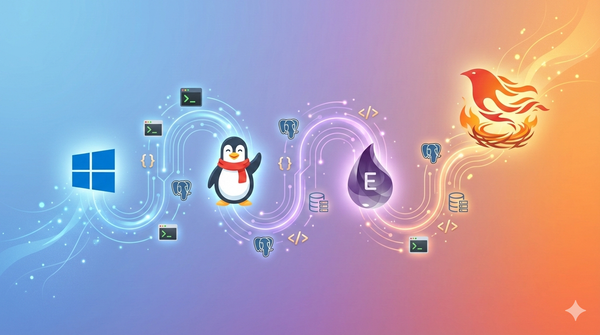
I come from a mobile development background with Flutter, and while I was comfortable there, I realized that understanding backend and web development is crucial for building scalable, well-architected projects.
In an earlier article, I explained why I chose Phoenix over popular JavaScript and Python frameworks.
This article is intended for those who, like me, prefer a deep, detailed learning process rather than a superficial overview. And also for those who have time and patience.
2. My Learning Strategy for Phoenix
I’ve broken my learning journey into clear phases. For each phase, I explain not only what I did but also why I chose that approach—this “why” adds psychological insight into my process.
Phase 0: First and Foremost — Understanding the Fundamentals
What I did:
- I transitioned from my Object-Oriented Programming (OOP) background to embrace Functional Programming (FP) concepts, which are at the heart of Elixir.
- I revisited core topics like recursion, data structures, and algorithms.
Why I did it:
- Mental Reorientation: Coming from an OOP background, I needed to unlearn some habits and build a new mindset for FP.
- Foundation Building: A solid grasp of FP fundamentals ensures that I understand Phoenix’s patterns deeply, not just superficially.
- Confidence Booster: Mastering these basics made me confident in tackling more complex topics later.
Phase 1: Just Watch and Do Nothing

What I did:
- I enrolled in a comprehensive Udemy course on Phoenix.
- I watched every chapter to gain a high-level understanding of the framework—covering project structure, MVC, Ecto, the request-response lifecycle, components, HEEx templates, API routing, plugs, pipelines, Mix tasks, etc.—without writing any code.
Why I did it:
- Holistic Overview: By watching and absorbing all the course content first, I could see the big picture without getting bogged down in the details.
- Reduce Pressure: Not having to code right away allowed me to enjoy learning without the stress of implementation errors.
- Strategic Pause: This phase helped me form a mental model of how the system works, which later made hands-on coding more intuitive.
Phase 2: Ecosystem Evaluation

What I did:
- I took a short break to explore the broader Phoenix ecosystem.
- I watched YouTube conferences, read articles, and engaged with community discussions to see real-world usage and best practices.
Why I did it:
- Contextual Learning: Understanding the ecosystem provided context and helped me see how Phoenix fits into the larger world of web development.
- Inspiration and Trends: This phase exposed me to innovative solutions and common pitfalls, inspiring new ideas and preparing me for deeper learning.
- Validation: It reassured me that my learning path was on the right track by comparing it with industry practices.
Phase 3: Let’s Get Our Hands Dirty

What I did:
- I began reading the full Phoenix documentation in detail.
- I explored topics such as the directory structure, request lifecycle, plugs and pipelines, routing, controllers, components, HEEx, Ecto, contexts, JSON APIs, Mix tasks, telemetry, asset management, and API authentication.
Why I did it:
- Deep Dive: I needed to understand the inner workings of Phoenix at a granular level.
- Clarification of Concepts: Reading the documentation helped clarify the theoretical parts I encountered in the course, turning vague ideas into concrete knowledge.
- Preparation for Coding: This phase was essential for building a strong foundation before I started coding, ensuring that when I did write code, I wasn’t just copying examples blindly.
Phase 4: Building a Real Project on My Own (Ongoing)
What I am doing:
- I planned two projects: a blogging site (with ad integration, authentication, and blog CRUD functionality) and an e-stamping SaaS website (for automating business processes).
- I identified the core requirements (e.g., authentication, HTML/CSS, PostgreSQL, payment systems) and deliberately chose projects that matched my current skill level without diving into advanced topics like channels or websockets.
Why I did it:
- Real-World Application: Building real projects forces you to solve unanticipated problems and deepens your understanding through practical application.
- Motivation Through Purpose: Choosing projects with personal or business significance keeps you motivated. For me, these projects provide a dopamine boost because they’re visually engaging and have clear, meaningful goals.
- End-to-End Learning: Real projects teach you more than isolated code snippets—they give you insight into planning, architecture, debugging, and deployment.
Phase 5: Reflect and Evolve
What I did:
- After building my projects, I plan to reflect on my journey, share my experiences with others, and evaluate the framework’s further potential.
- I intend to reassess my goals and decide whether to build more SaaS projects or dive into advanced topics like BEAM internals, LiveView for full-stack development, websockets, and concurrency.
Why I did it:
- Consolidation: Reflection allows me to consolidate what I’ve learned and identify areas for improvement.
- Community Engagement: Sharing my journey not only helps others but also reinforces my own learning.
- Future Planning: This phase is crucial for setting the stage for the next level of challenges—moving from foundational knowledge to mastering advanced concepts.
Tools & Resources That Helped Me
- Phoenix & Elixir Documentation:
- Elixir Introduction
- Phoenix Overview
- Courses:
Stefan Grider’s course (Phoenix Bootcamp) - The Pragmatic Studio’s Phoenix course (offers a full-stack approach with LiveView)
- YouTube Tutorials:
- Alchemist Camp — Clear and practical tutorials.
- Community & Forums:
- Elixir Forum — A great place for discussion and problem-solving.
- Phoenix Discord — Real-time help and networking.
- ElixirConf and CodeSync for deep dives and advanced topics.
4. Final Thoughts and Next Steps
At this point, I have a solid foundation in Phoenix and a clear roadmap for building real projects that test my skills. Whether I continue creating SaaS projects or dive into advanced topics like Open Telemetry, BEAM internals, or real-time websockets, I know I have a strong base to build upon.
For anyone who values deep, methodical learning over quick fixes, I highly recommend this approach. It may be slower, but the clarity and mastery you gain are invaluable.
I’d love to hear your thoughts:
- What challenges have you faced when learning a new technology in depth?
- How do you ensure you truly understand each concept before moving on?
Let’s share our experiences and learn together!

Every cup counts! Thank you for your support. ❤️
Connect With Me:
LinkedIn: https://www.linkedin.com/in/satendra-pal-943540209/